The Future of Disinfection.
Automated HOCl biosecurity systems that protect farms and food facilities from pathogens — continuous, non-toxic protection for air, water, and surfaces, with no harsh chemicals and no downtime.
Pathogens spread in hours. A single outbreak can mean full flock depopulation and months of downtime. Be protected before it starts.
The Future of Disinfection.
Automated biosecurity systems that protect farms and food facilities from pathogens — continuous, non-toxic HOCl protection for air, water, and surfaces, with no harsh chemicals and no downtime.
Who are we?
Decades of clinical and medical experience, building pathogen-defense systems for agriculture and food production.
What's our mission?
Help farms and food facilities stop pathogens before they cause harm — protecting animals, workers, and the food supply.
What do we offer?
Turnkey, automated HOCl systems that generate on-demand, non-toxic protection for air, water, and every surface.
Where the Need Is Greatest.
Focused on the industries most directly impacted by biological risk — from the farm to the processing line.

Commercial Poultry
Layers, broilers, turkeys — commercial operations managing HPAI biosecurity risk at scale.

Livestock Operations
Large-scale dairy, beef, and mixed livestock facilities requiring continuous pathogen control. Recent detections of New World Screwworm in Texas cattle — the first U.S. cases in nearly 60 years — are a reminder that livestock biosecurity threats are active, not hypothetical.

Food Processing
USDA-inspected processing plants across meat, dairy, and packaged food — requiring zero-residue antimicrobial solutions and HACCP compliance.

Fresh Produce
Washing, packing, and cold-chain facilities where contamination during processing — not the farm — is often the real source of outbreaks. A 2026 nationwide Cyclospora outbreak tied to lettuce sickened tens of thousands of people across 47 states — a reminder that continuous, non-toxic sanitation is now essential for produce operations, not optional.
What Biosecurity Returns.
Sector-by-sector outcomes from continuous HOCl protection — measured in pathogens stopped, downtime avoided, and dollars preserved.
Commercial Poultry
Full USDA biosecurity records on file — keeping federal indemnity eligibility intact.
Livestock Operations
Non-toxic continuous protection across water, air, and surfaces — built for scaled operations.
Food Processing
Meets USDA-inspected plant requirements without halting production.
Fresh Produce
Continuous sanitation at the point where outbreaks actually begin.
Representative outcomes from deployed HOCl systems. Results vary by facility size, configuration, and protocol adherence.
The Threat Landscape Is Broader Than HPAI.
Farms, food facilities, and fresh produce operations face a full spectrum of pathogens — viral, bacterial, fungal, and parasitic. Each one requires the same answer: a continuous, validated biosecurity system.
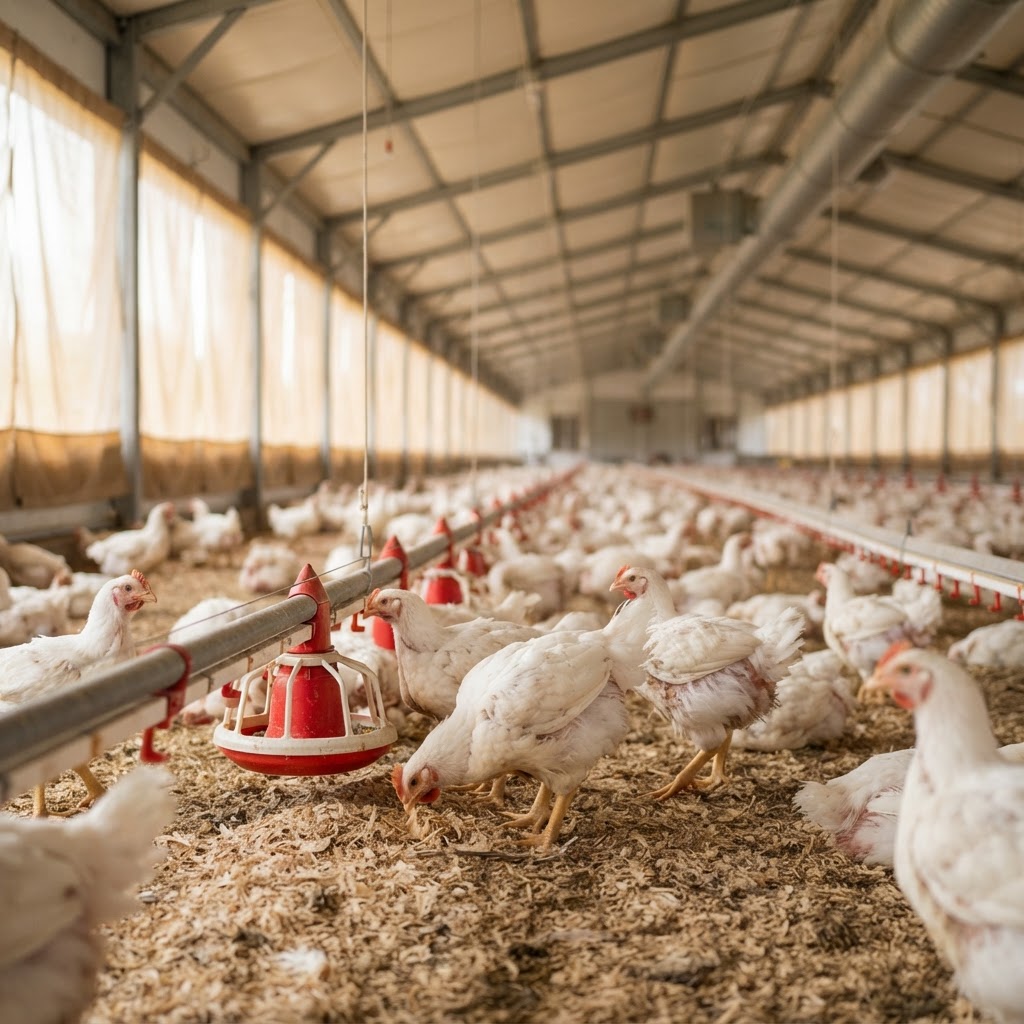
HPAI H5N1 / H5N2
Near-100% mortality in commercial poultry flocks. H5N1 has now crossed into U.S. dairy cattle herds — the species barrier is no longer a boundary. One confirmed detection triggers mandatory whole-flock depopulation.
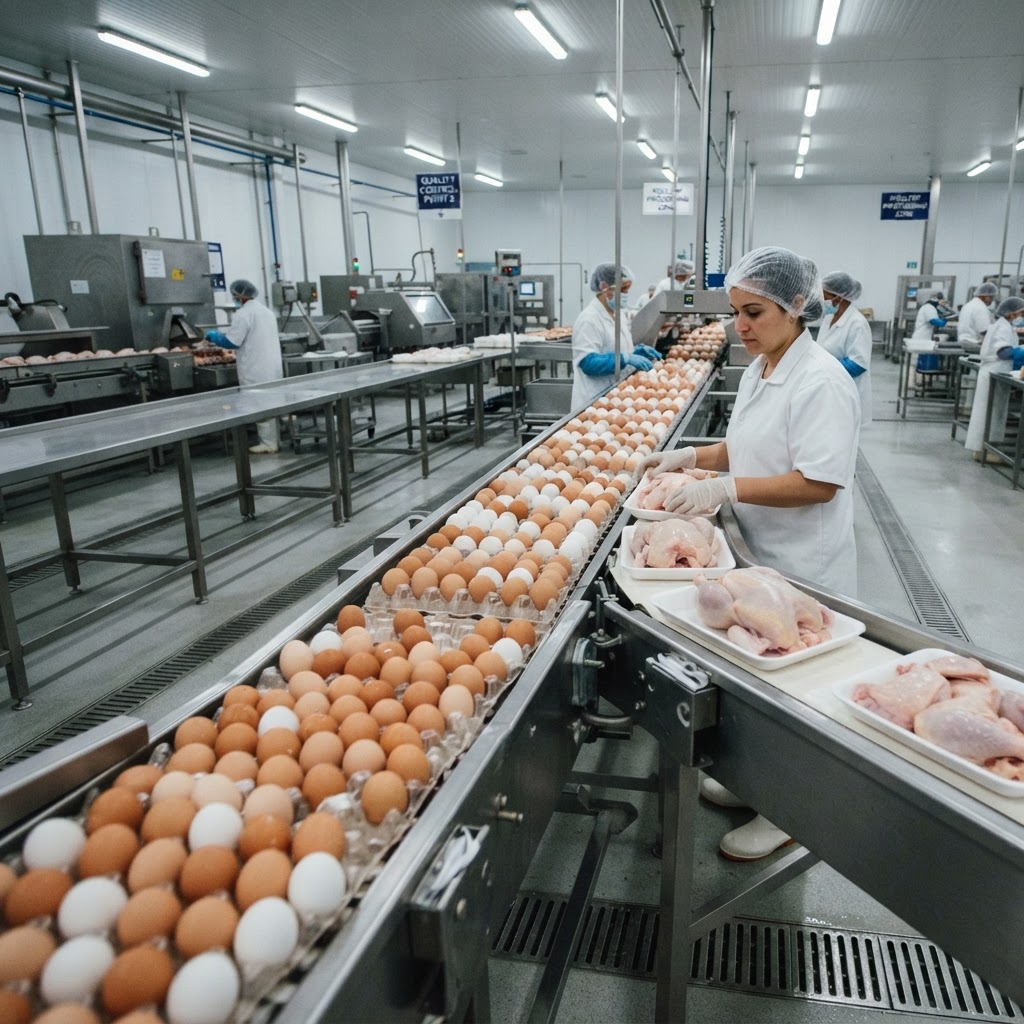
Salmonella Enteritidis / Typhimurium
Leading cause of foodborne illness in the U.S., linked to shell eggs, poultry carcasses, and processing lines. HOCl achieves complete inactivation on shell eggs at just 26 mg/L (Ni et al., Poultry Science).
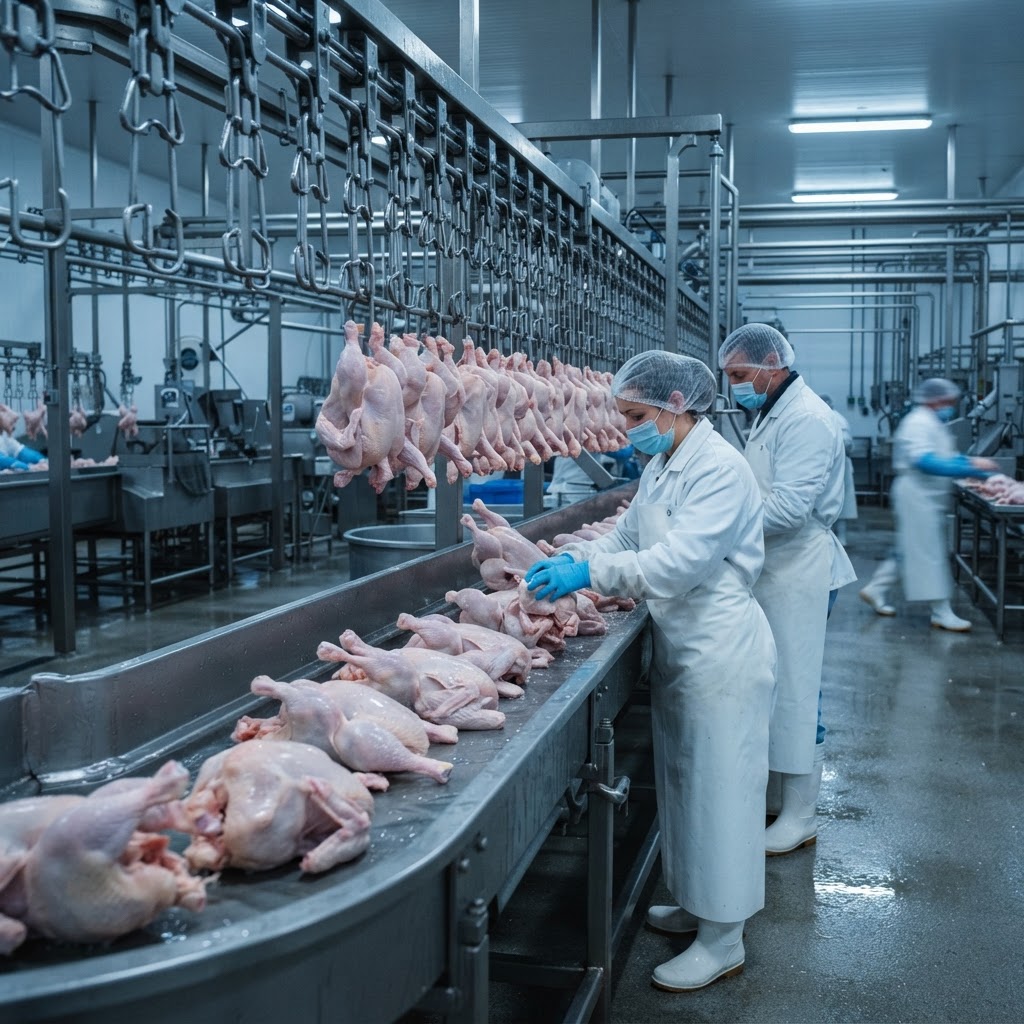
Campylobacter jejuni
The most common bacterial cause of food-related gastroenteritis in the U.S. Colonizes broiler intestines without signs; transferred to carcasses during slaughter. HOCl reduces carcass counts ~3-log CFU/g (Park et al.).
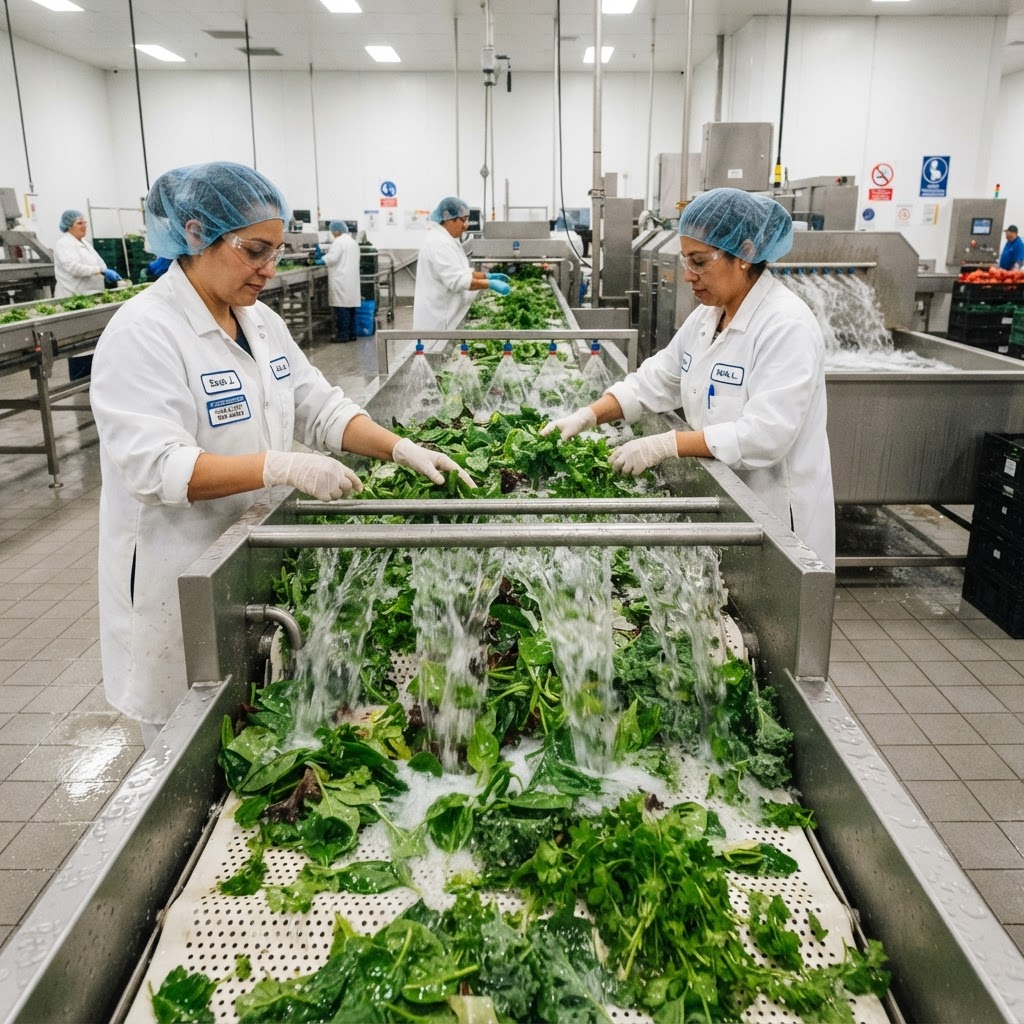
Cyclospora cayetanensis
Waterborne parasite responsible for recurring U.S. multistate produce outbreaks — raspberries, cilantro, basil, pre-packaged salads. Resistant to standard chlorine at normal doses; requires oxidative treatment of irrigation and wash water.
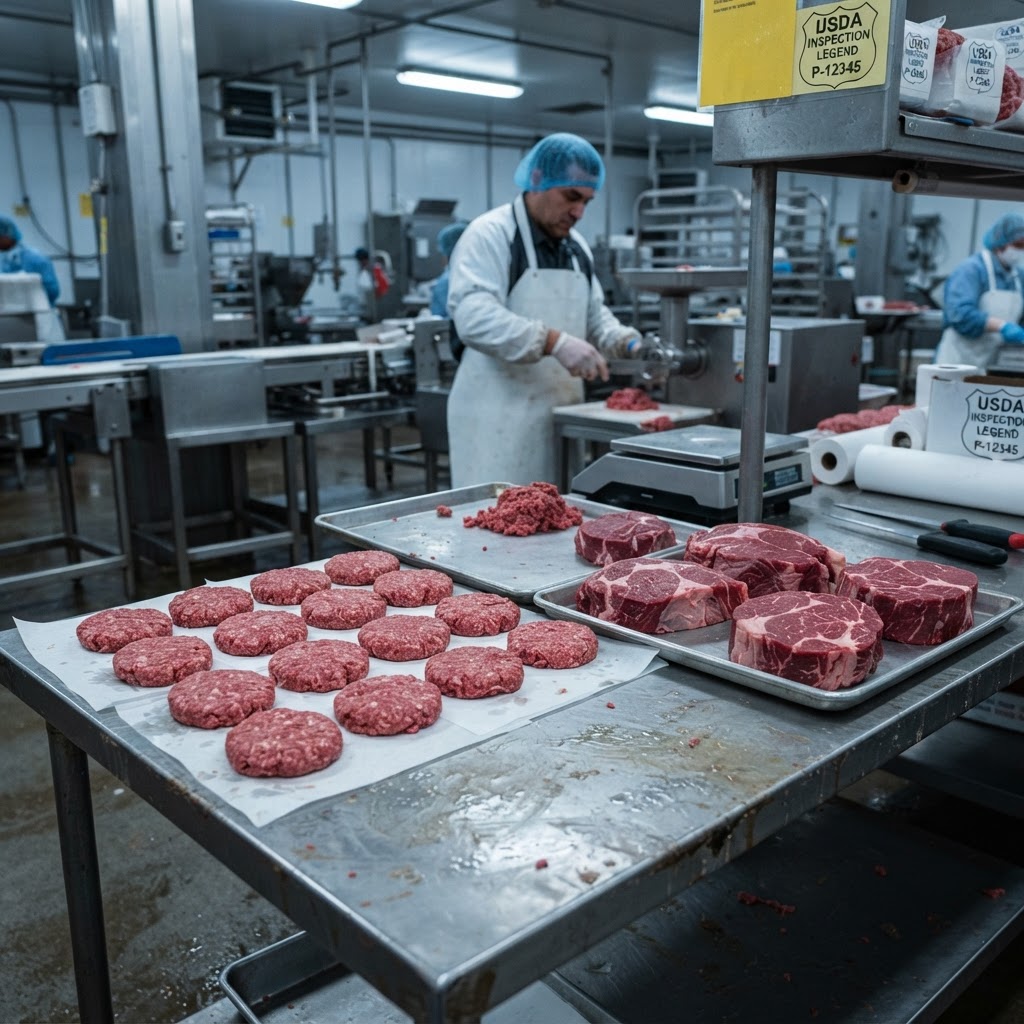
E. coli O157:H7 / STEC
Shiga toxin-producing E. coli causes severe illness and HUS in vulnerable populations. Linked to ground beef, leafy greens, and contaminated water. HOCl achieves >6-log reduction on meat-contact surfaces within 2 minutes (Review [21]).
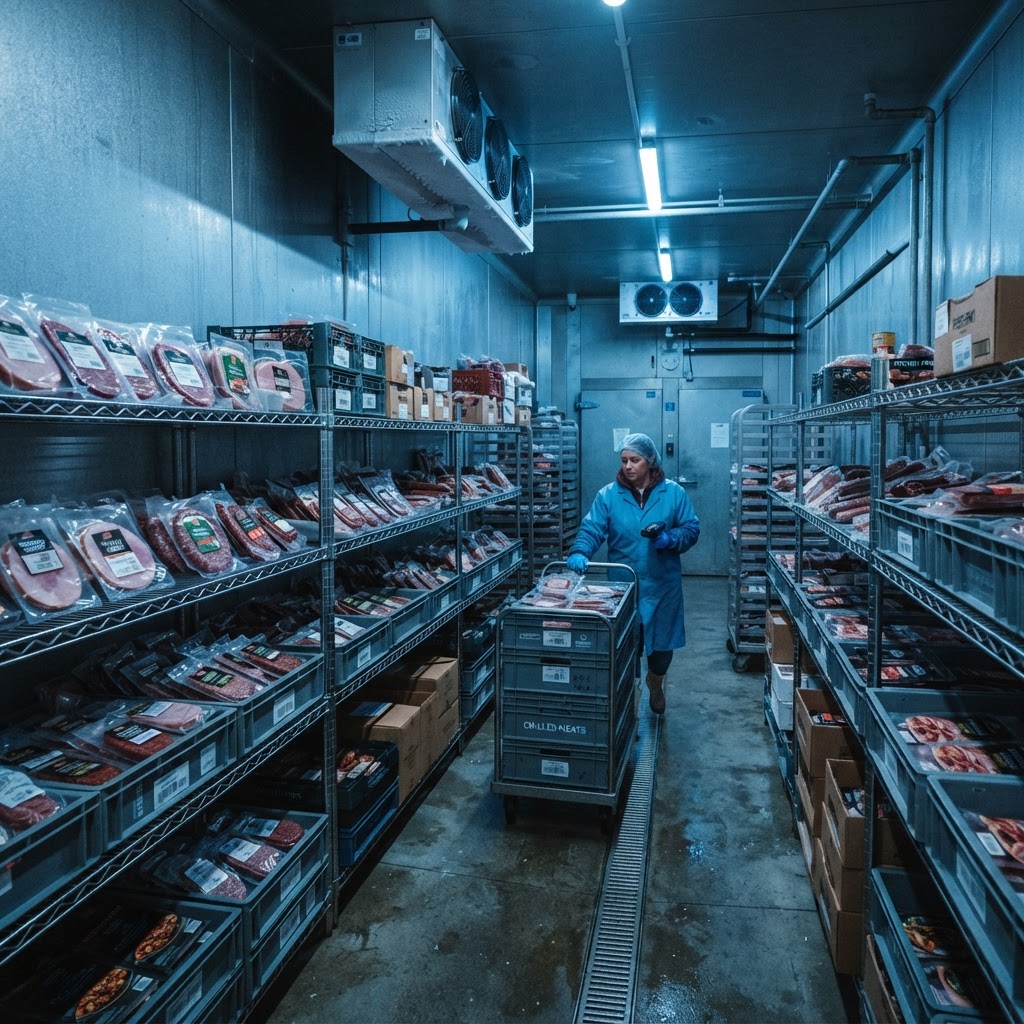
Listeria monocytogenes
Thrives at refrigeration temperatures, colonizes drains, coolers, and processing surfaces as persistent biofilms. 20–30% case-fatality rate in high-risk patients. HOCl penetrates and eliminates biofilm matrix where bleach fails.
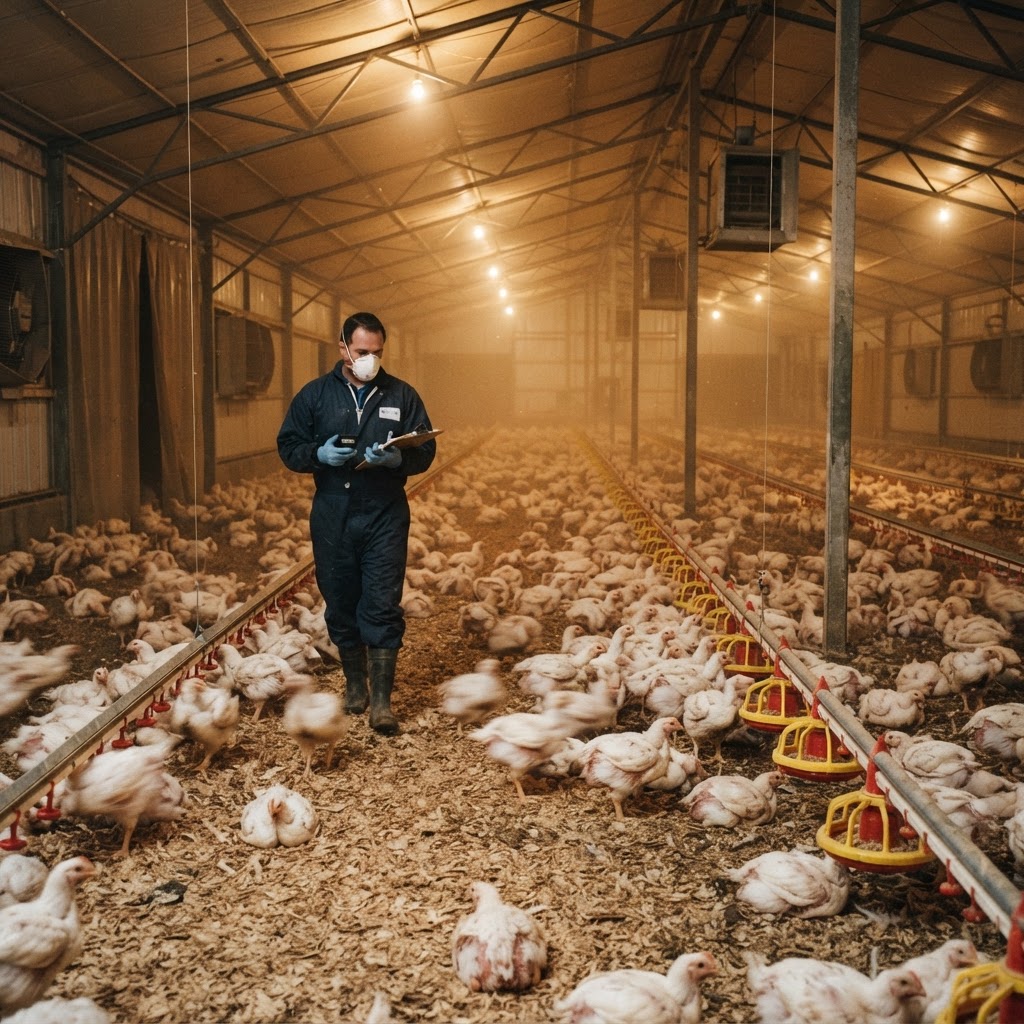
Newcastle Disease Virus (NDV)
Highly contagious respiratory and neurological poultry virus with global outbreak history. Spreads via aerosols, fomites, and contaminated equipment. HOCl's enveloped-virus mechanism inactivates NDV on surfaces and in aerosol applications.
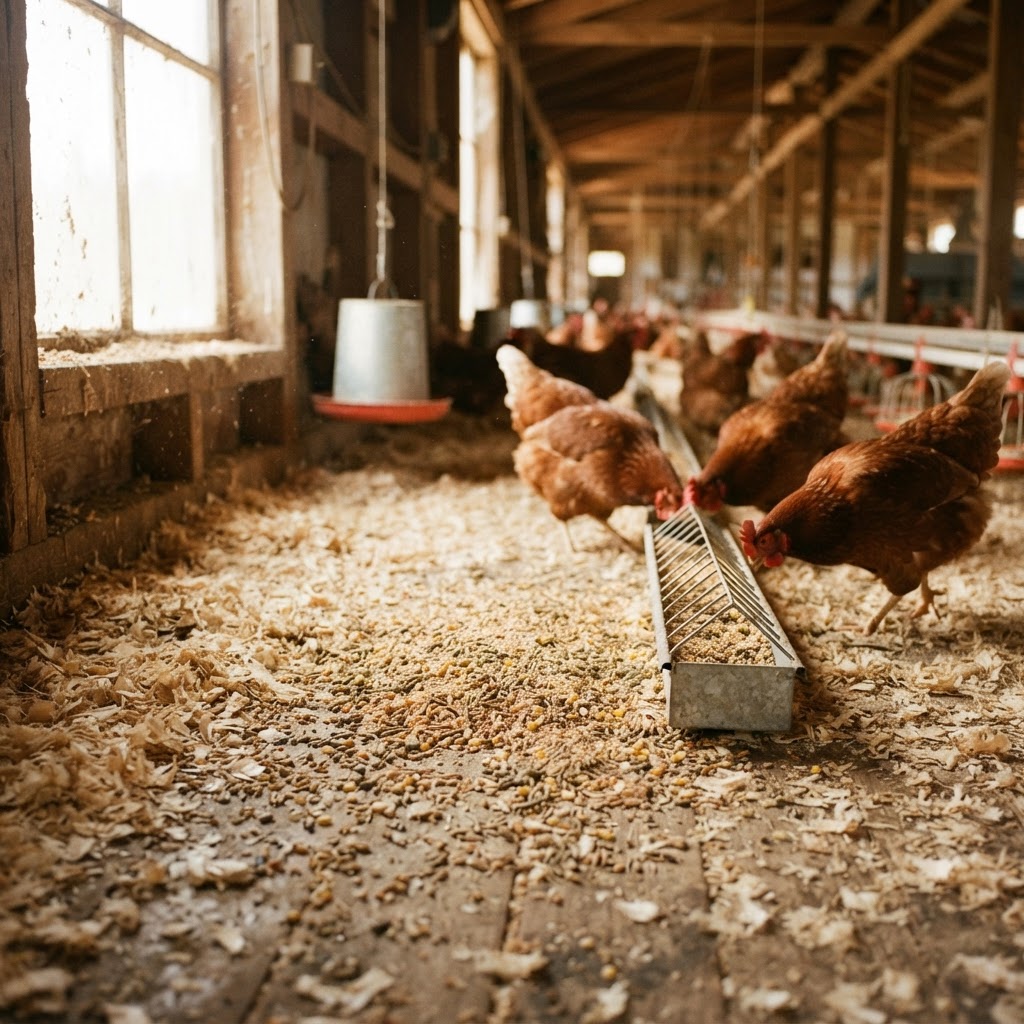
Aspergillus & Candida (Fungi/Mold)
Aspergillus flavus and A. fumigatus produce aflatoxins in feed and cause respiratory disease in poultry. Candida spp. contaminate water lines. HOCl documented to inactivate both genera and penetrate water-line biofilms.
USDA Update: Farms without documented biosecurity protocols on file may no longer qualify for full federal indemnity compensation. Having a plan in place — before an outbreak — matters.
A Complete Biosecurity System.
Six integrated steps that keep your facility protected — from water in to reports out.
Water Purification
Water is filtered and softened — removing sediment and minerals for consistent, high-quality output.
On-Site HOCl Generator
Produces fresh HOCl on demand, directly at your facility. Each cycle provides 24 hours of continuous disinfection.
Facility Distribution
HOCl is delivered across your entire operation — aerial misting and aerosolization for airborne pathogen control, nebulization for fine-particle coverage, drinking waterlines, footbath and vehicle wash stations, employee decontamination points, and dust control and mitigation systems.
Smart Monitoring
Over 40 sensors check air and water quality in every zone every 30 seconds, around the clock.
Compliance Documentation
Weekly compliance reports are generated automatically and stored for your records.
See It In Action
Real BioSafe systems are installed and run at active facilities — on-site generation, full-facility distribution, and live monitoring in the field.
Centralized Monitoring System
40+ IoT sensors log water chemistry, air quality, and pathogen indicators every 30 seconds — 24/7. Our GenAI layer analyzes trends, flags anomalies, and auto-generates compliance reports.
Validated at the Highest Level.
HOCl technology has been independently validated at five U.S. federal installations under the Department of Defense STED Test and Evaluation program — demonstrating effectiveness, safety, and reliability at the highest level.
"Zero eye, skin, or respiratory irritation. Zero PPE required. $0.94 to $377.34 per gallon cheaper than traditional products."
Validated Federal Sites
Validated Sources
Cross-referenced & verified
Cross-referenced sources
Federal Funding May Be Available.
The USDA BIFA program offers cost-sharing for eligible operations. We can help you navigate the process.
Not affiliated with USDA. Information for awareness only. Contact USDA directly to verify eligibility.
Understand the Program
The USDA HPAI Biosecurity Infrastructure Funding Assistance (BIFA) program helps eligible operations fund biosecurity improvements.
Check Your Eligibility
Operations with 500 or more birds may qualify. Eligibility depends on facility type, location, and USDA/APHIS review.
Estimate My Cost-ShareUSDA Cost-Share Support
USDA covers a percentage of approved biosecurity infrastructure costs. The rate varies by flock size.
USDA Cost-Share Rate Estimator
Based on USDA APHIS BIFA program tiers. View official USDA guidance →
Estimates are illustrative only. Actual eligibility and amounts are determined by USDA/APHIS.
We know this process. Let us guide you — at no cost.
Schedule a Free Guidance CallKey Agencies & Resources
Measurable ROI, Sector by Sector.
Biosecurity isn't a cost — it's a return. Here's what continuous HOCl protection delivers across the industries we serve.
ROI & Risk-Reduction Estimator
Estimates are illustrative, drawn from deployed-system averages. Actual savings and risk reduction depend on facility configuration, protocol adherence, and regional outbreak pressure.
Commercial Poultry
Documented protocols keep USDA indemnity eligibility intact.
Livestock & Dairy
Cross-species protection against H5N1 spread into herds.
Food Processing
Meets USDA-inspected plant requirements without halting production.
Fresh Produce
Continuous sanitation where outbreaks actually begin.
Representative returns from deployed HOCl systems. Actual ROI varies by facility size, configuration, and protocol adherence.
What We're Watching in Biosecurity Policy.
Recent developments shaping U.S. agricultural biosecurity, food safety, and federal funding — curated for operators in the field.
USDA continues refining depopulation indemnity and biosecurity plan requirements for affected premises. Operations without a documented biosecurity plan on file risk reduced federal indemnity.
Cost-share funding remains available for eligible poultry operations to install documented biosecurity infrastructure — covering a portion of approved upgrades by flock size.
Ongoing interagency monitoring of H5N1 in dairy cattle reinforces the need for integrated, cross-sector biosecurity spanning poultry, livestock, and human health.
Strengthened produce-safety and food-contact sanitation expectations continue to elevate demand for no-rinse, residue-free antimicrobial solutions in processing and packing.
Editorial briefings for industry awareness. Verify current rules and eligibility directly with the issuing agency.
Where Protection Matters Most.
From poultry barns to processing lines — the real-world environments our automated HOCl systems are built to defend.
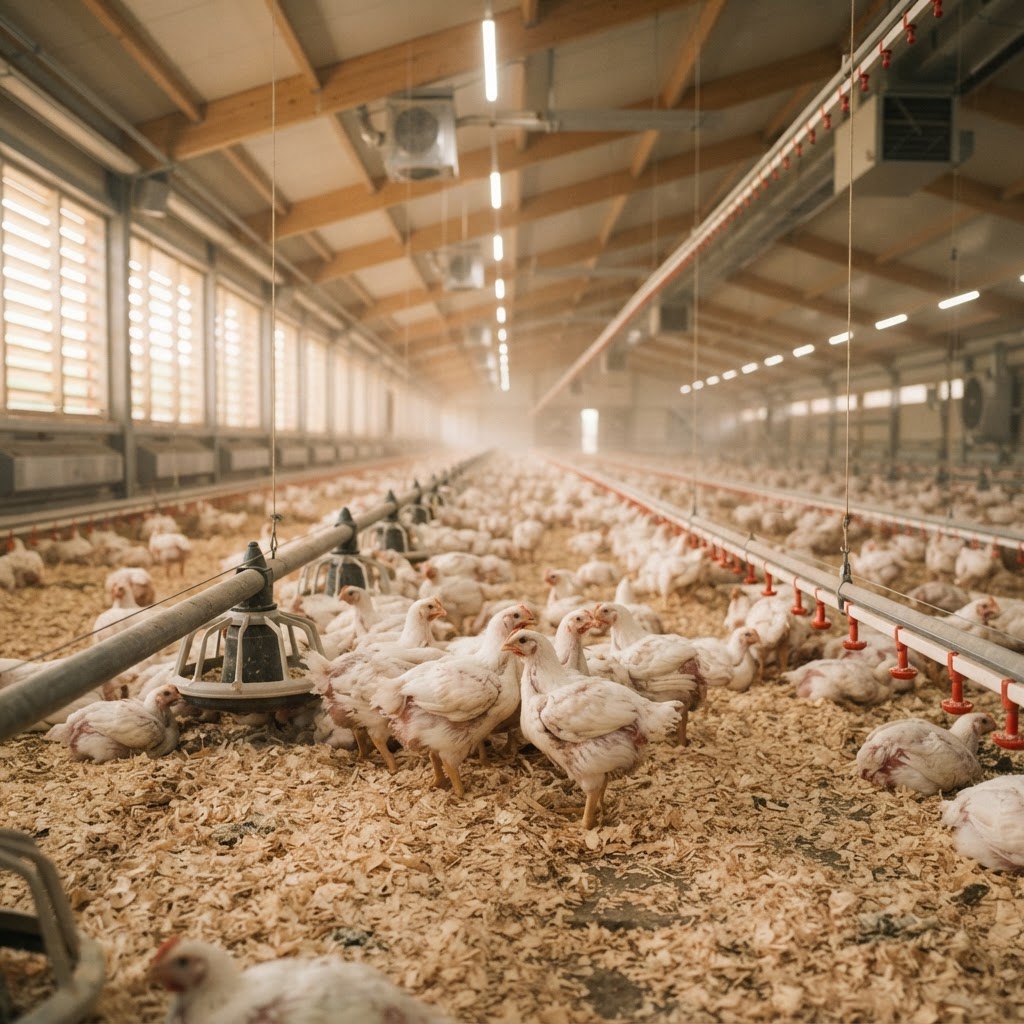
Broiler Barn Interior
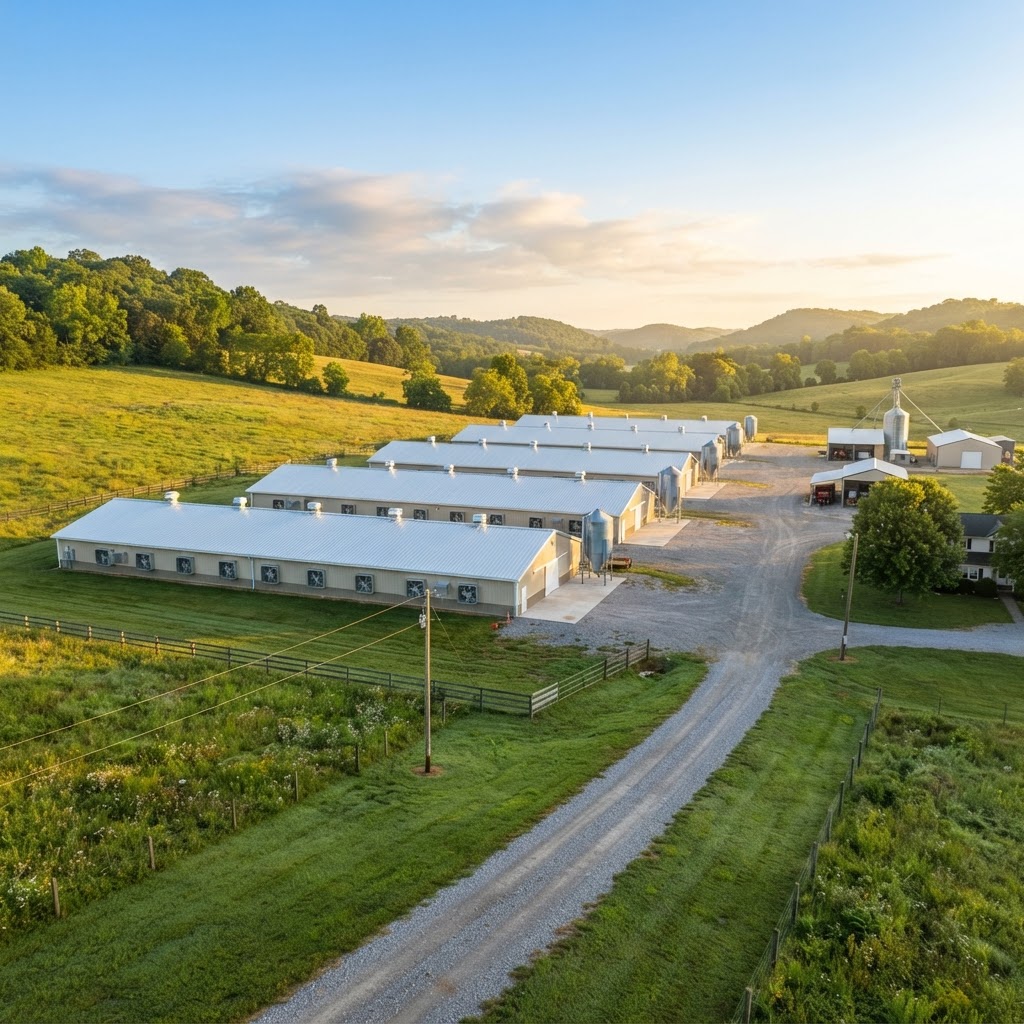
Poultry Facility
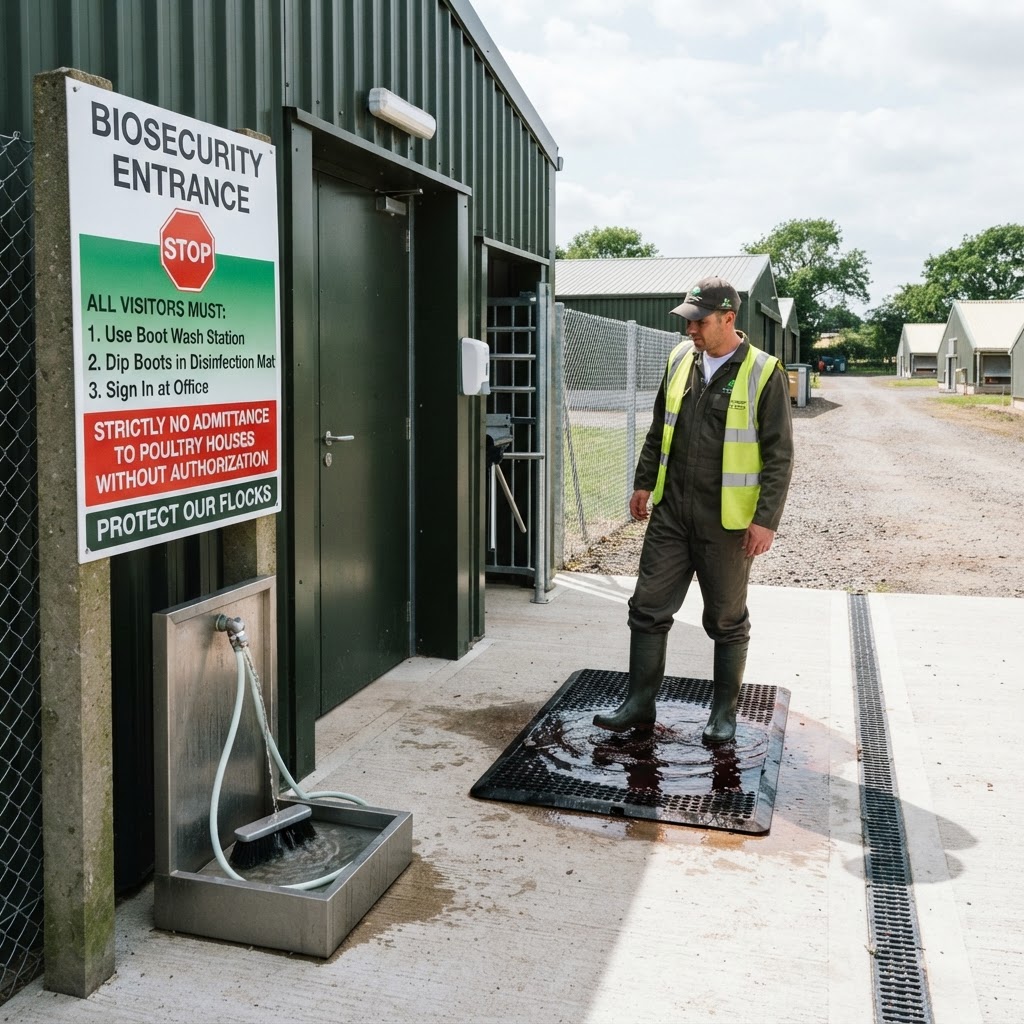
Biosecurity Entry Point
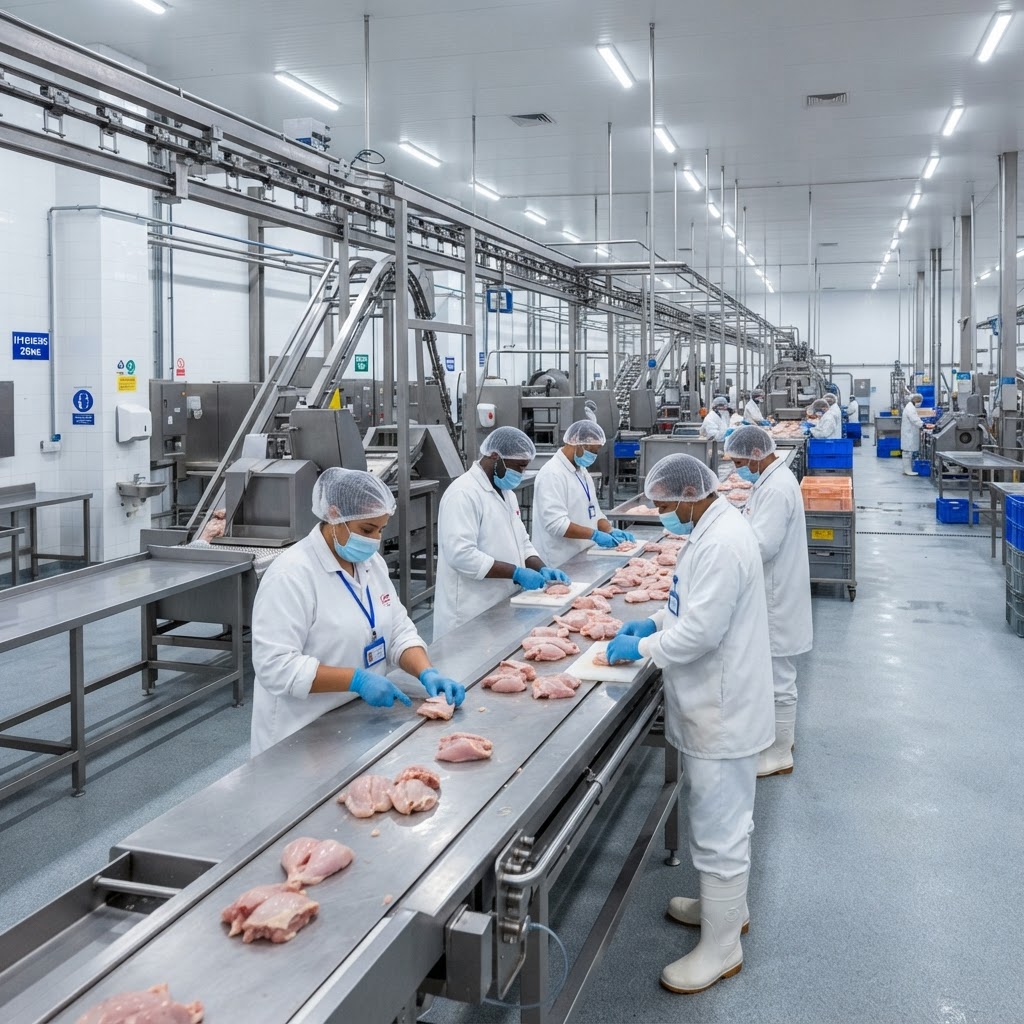
Processing Line
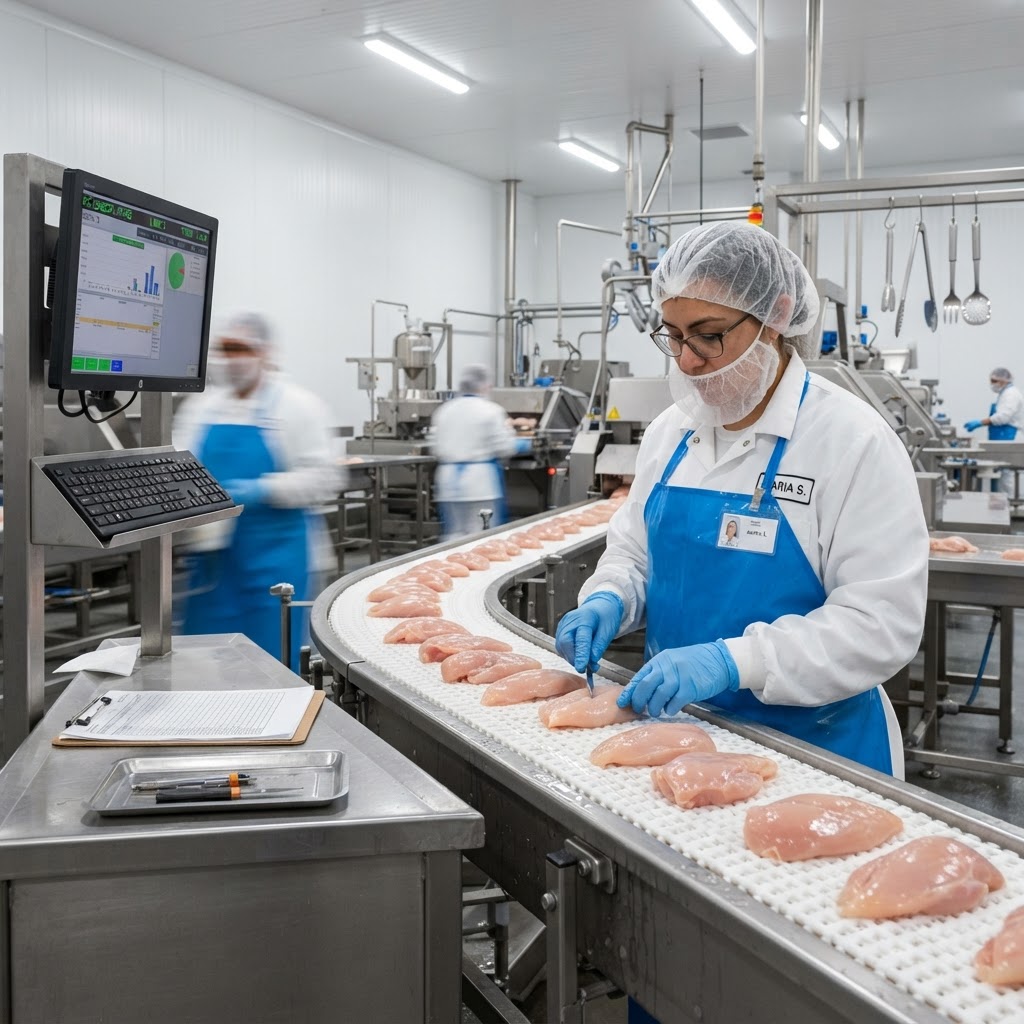
Quality Control
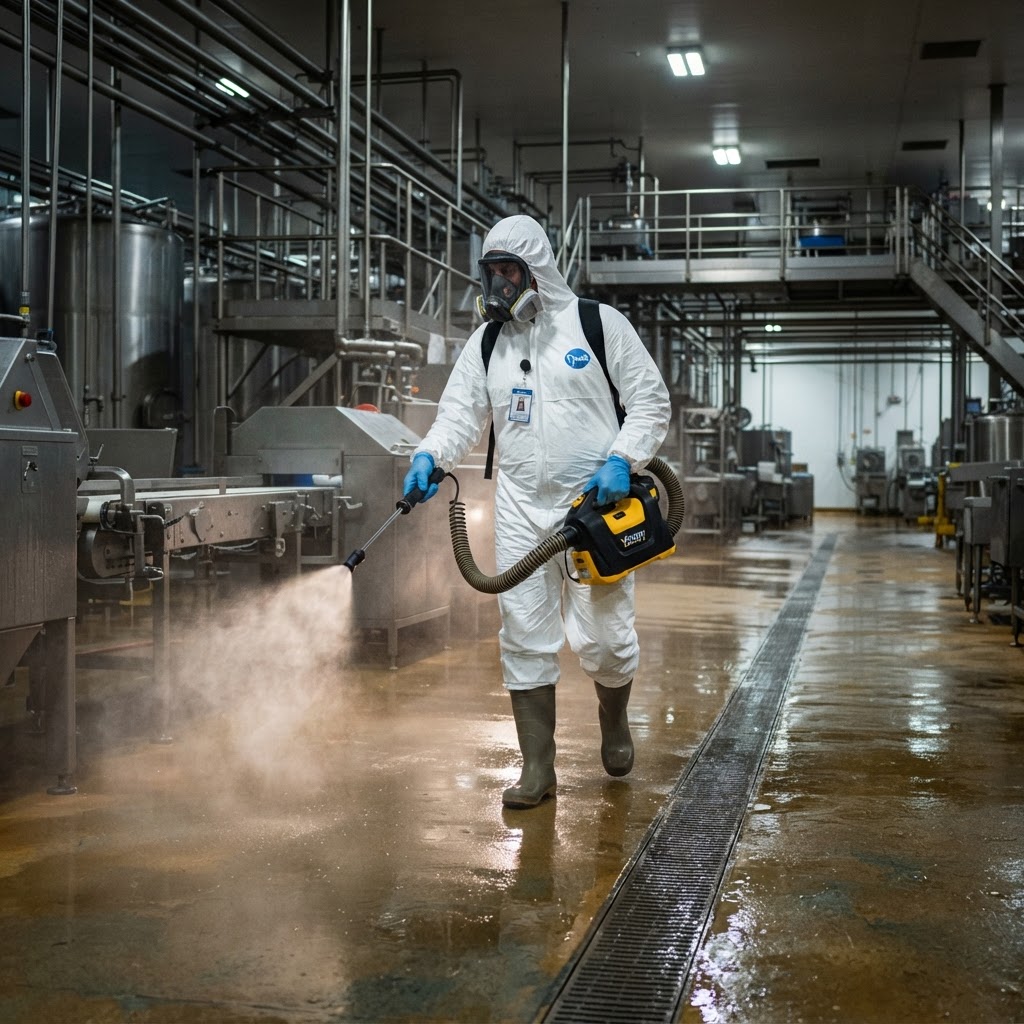
Deep Sanitation

Dr. Chari
Four Decades in Medicine.
Built to Close Biological Risk.
Dr. Chari is a doctor and entrepreneur. After decades of treating patients, he saw firsthand how biological threats, left unchecked, can spread rapidly and cause irreversible harm. That led him to found Dr. Chari's Biotech with one mission: give farms and food facilities the tools to stop pathogens before they cause physiological damage and death.
Book a Call"Biological risk is not a metric to be managed. It is a system to be closed."
Straight answers on HOCl safety & biosecurity.
Clear, professional responses to the most common questions from farms and food facilities.
Biosecurity questions for the sectors we serve.
Commercial Poultry
Livestock & Dairy
Food Processing
Fresh Produce
Start a Conversation.
Whether you have a large operation or a simple question, we'd love to hear from you.